
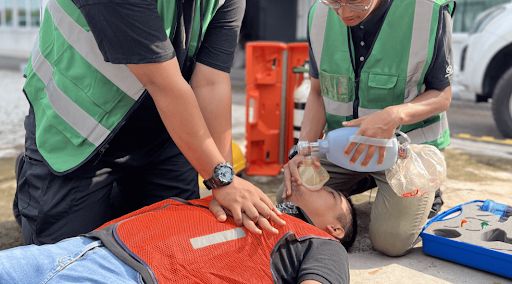
Unforeseen circumstances can require more than only the basics, particularly if there are multiple injuries or evolving circumstances. An advanced first aid course will extend the skills that individuals may have to deal with complex incidents. Training provides an overview of structured assessment, the priorities during an emergency, continuing care, and coordinated response if professional help is still on its way. It also helps to keep one from jumping into decisions or conclusions quickly—after all, there are no neat, predictable patterns in serious matters. Learners can respond more effectively to improve safety, dignity and clear decision-making if they are better prepared. Breadth gives learners confidence to handle challenging times with greater focus and purposeful action.
Assessment
The preceding activities are best started after a careful observation of the incident, particularly if complex. In an advanced first aid course, the learner understands the utility of emergency signals, as well as the need to adapt to new conditions and identify emergency priorities. This more holistic approach helps focus on breathing, circulation, injury, behaviour and hazards encountered. Instead of doing what is most apparent, participants are taught to look at the whole situation. The latter approach can enhance the accuracy of judgements when multiple concerns are combined and information is incomplete.
Emergency Priorities
During serious incidents, where more than one person may be involved, or where conditions change rapidly, the situation may become confusing. Gaining advanced training enables the learner to prioritise activities without compromising the need for safety. Participants learn how to prioritise tasks for action and prioritise them after doing the action. This organised thinking will allow you to avoid hasty decision-making in high-risk scenarios that to miss key details. Having clear priorities also assists responders in utilising support resources while in the waiting time for professional help.
Ongoing Care
Not all emergencies are going to go away immediately; some need constant assistance beyond a one-off circumstance. In an advanced first aid course, participants will learn about changes that can occur over time. Training serves as a constant review, monitoring and adjustment process whenever and wherever new information becomes available. This way, responders don’t make assumptions that a previous decision will still be appropriate. The provision of ongoing care can be particularly helpful when medical help does not arrive faster.
Team Coordination
A difficult incident may involve a number of responders, bystanders, supervisors or emergency personnel involved with more than one incident. Advanced training enables participants to grasp the importance of working collaboratively to minimise overlap and confusion. Clear roles enable people to share tasks, ensuring the flow of key information between them. Learners also gain experience communicating succinctly with others to allow them to grasp changes in circumstances. Complicated emergency scenarios can become more controlled, organised, and professionally managed through good coordination.
Adaptability
In the real world, emergencies seldom match manoeuvres. Advanced learning inspires responders to think creatively through their principles and decisions when facing unknown and low-resource situations. Participants do not depend on following a discrete sequence but rather think about the context of the situation, and respond to the situation accordingly. This versatility will help guide better actions at work, in the community, outdoors—and in an emergency. Flexible knowledge is particularly valuable in environments where the rules and requirements evolve at a higher rate than it is possible to give clearer instructions at a rapid pace.
Leadership Readiness
Sometimes there are emergencies where someone has to organise quick action whilst others are in doubt. The advanced training course can reinforce leadership by helping participants to clearly and calmly communicate their priorities. Learners gain confidence in simple tasks that they allocate to themselves, asking for assistance and staying focused under pressure. Not taking unnecessary control but assisting helpful actions to occur efficiently. This can be achieved in terms of better cooperation until any professional responders arrive to take over care.
Workplace Capability
Employers have a high degree of regard for individuals who can go the extra mile beyond first aid skills in times of stress. Advanced training expands capabilities in areas where there can be injuries, illness or high-complexity incidents. Adult staff with greater knowledge will be able to assist with current procedures and be more confident when fulfilling their trained role. This preparation also benefits teamwork as well, as people know who they can go to for help during serious situations. A capable workplace response depends on what is useful, realistic, and repeated to build on.
Conclusion
An advanced first aid course can improve real-life judgment the ability to change and adjust working well with others and responding well during emergencies. More detailed training helps students handle difficult situations and problems that they have not seen before. It encourages thinking and taking action, deciding what is most important keeping an eye on things and letting others know if things change. These abilities can be useful when there is an emergency at work in the neighborhood or, in a person’s life. When people have knowledge and hands-on experience they can provide reliable help until professionals come. This kind of training can also help make sure that your mind stays clear when there is unexpected stress.
