Hearing loss announces itself quietly and then waits — sometimes for years — whilst the person experiencing it adapts, compensates, and gradually reorganises their social life around the difficulty without consciously naming what they are doing or why. The television volume climbs incrementally. Restaurant meals become less enjoyable for reasons that feel vaguely social rather than specifically auditory. Phone calls with certain people seem to require unusual concentration. The brain is remarkably good at managing the shortfall for a surprisingly long time, and this capacity for compensation is part of what makes the delay so understandable and so costly simultaneously. A hearing aid test cuts through this accumulation of quiet adaptation and provides an accurate picture of what has actually been happening rather than what daily workarounds have been obscuring from view.
Tests Reveal More Than Volume
Most people imagine a hearing test as a straightforward exercise in determining whether sounds at different volumes can be detected, and this understanding significantly undersells what a comprehensive audiological evaluation actually maps. Frequency-specific testing identifies precisely which parts of the hearing range have been affected and to what degree. Speech discrimination testing — which is different from pure tone testing — reveals how well the auditory system is processing speech sounds it does receive rather than simply whether it receives them at all. This distinction matters enormously for device fitting, because a person whose hearing loss primarily affects discrimination rather than detection needs a different technological response from one whose primary difficulty is with volume alone.
Social Life Reorganises Before Anyone Notices
One of the subtler effects of unaddressed hearing loss is how it quietly reshapes social behaviour in ways that neither the person experiencing it nor the people around them initially connect to hearing. Group conversations become effortful rather than enjoyable. Noisy environments that were previously unremarkable start to feel draining. Certain people — those who speak quickly, who have softer voices, or who tend to look away during conversation — become harder to spend time with for reasons that feel interpersonal rather than auditory. The gradual withdrawal from these situations accumulates into a meaningfully smaller social life before the underlying cause has been identified, and by the time the connection is made, the pattern of avoidance has already established itself.
Children and the Timing That Cannot Be Recovered
Paediatric hearing assessment operates under a different urgency from adult testing because the developmental windows it intersects with do not remain open indefinitely. Speech and language acquisition are directly dependent on the quality and completeness of auditory input during early childhood, and hearing loss that goes unidentified during these windows creates gaps that are considerably harder to close later than they would have been had the loss been found and managed early. Hearing aid tests for children showing signs of difficulty — inconsistent responses to sound, delayed speech, frequent requests for repetition, difficulty attending in group settings — are time-sensitive in a way that adult testing is not, and the outcome difference between early and late identification in childhood is substantial and well documented.
Tinnitus and What Testing Clarifies
People who live with tinnitus — the persistent ringing, buzzing, or tonal sounds that accompany the experience of many people with hearing loss — often manage the condition in isolation for years without connecting it to their hearing health or understanding that an audiological assessment can provide useful information about both simultaneously. Tinnitus frequently correlates with hearing loss at specific frequencies, and a comprehensive assessment that maps the hearing profile accurately gives the audiologist the information needed to discuss management approaches that are calibrated to the individual’s actual pattern of hearing function rather than generic approaches applied without that underlying knowledge.
What Accurate Testing Makes Possible
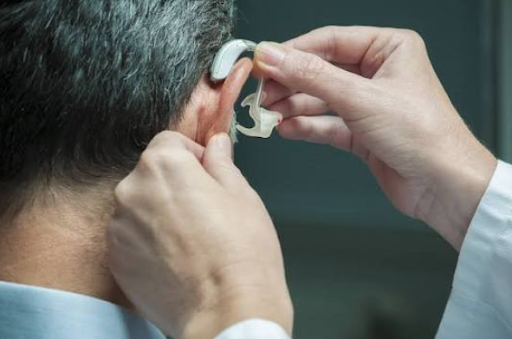
The hearing device landscape has changed substantially in recent years, and what is now achievable through modern hearing technology depends almost entirely on the accuracy of the assessment that precedes it. Contemporary devices are programmable signal processing systems that can be calibrated to address the specific frequencies and environments where a particular person’s hearing is most affected — not simply amplifiers that make everything louder across the board, which creates its own set of problems. An accurate audiological profile is the foundation for a device fitting that is genuinely effective rather than merely technically adequate, and the difference between these two outcomes is experienced immediately and daily by anyone who has received one versus the other.
Conclusion
A hearing aid test provides the accurate, detailed picture of hearing function that every subsequent decision about hearing health depends on — from whether intervention is needed to what type of intervention will actually help. The people who act on early signs and have their hearing properly assessed consistently find that the information changes not just their approach to hearing health but their understanding of how significantly the unaddressed loss had already been shaping their daily experience in ways they had attributed to other causes entirely.