
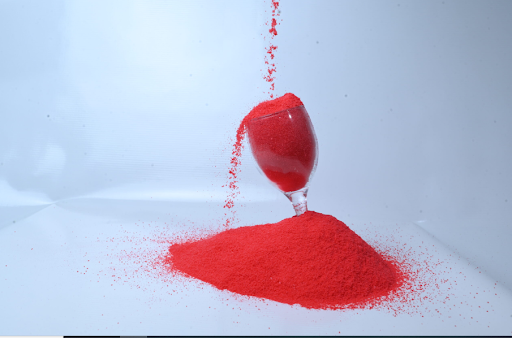
Plastic that is ground into very fine particles is the main reason why hollow products without any seam can be made in the rotational moulding process. When this material is put inside a mould that is heated and rotating, it melts evenly and a smooth hollow product is formed. Water tanks, kayaks, playground equipment and storage bins are mostly made in this way. Linear low-density polyethylene in the form of LLDPE rotomoulding powder is the reason why plastic is able to cover the wall of the mould in one even layer.
LLDPE is one type of flexible plastic. To make it, ethylene is mixed with a small amount of some other olefin, like butene or hexene. Because of this mixing, the molecular structure gets short and regular branches. Toughness, stretch and resistance against cracking of the material are coming from these branches.
If we compare with normal low-density polyethylene, LLDPE gives better performance when impact and stress are there. That is why rotational moulding companies choose it as one of their main materials.
Why Is the Material Ground Into Powder?
In rotational moulding, there is no pressure to push the melted plastic into the mould. Only gravity and rotation are spreading the plastic over the wall, so the material must move very easily. This is possible because of the powder.
Tiny particles are flowing almost like sand, and they reach to every corner of the mould. As the temperature rises, the particles become soft, they stick with each other and one continuous layer is formed. Melting of bigger pellets would happen unevenly, and gaps, bubbles or thin spots would remain in the product.
The size of most powder used here is around 300 to 500 microns, which is nearly the width of a few human hairs together.
How Does the Rotational Moulding Process Work?
There are four simple stages in the process:
- A fixed quantity of powder is filled inside a hollow metal mould.
- The mould is closed, then it goes into an oven and rotates on two axes.
- Melting of the powder happens and the inner wall gets covered equally.
- After the cooling, mould is opened and the finished part is taken out.
As the plastic never gets high pressure, only very little internal stress remains in the finished part. Due to this, the products can keep their strength and shape for many years of use.
What Makes This Material Suitable for Rotational Moulding?
These properties make LLDPE a natural match for the process:
- Impact strength: knocks can be taken by the parts without cracking, even in cold weather.
- Flexibility: the material bends a little under load, it does not break.
- Chemical resistance: many acids, alkalis and salts are not able to damage it.
- Good flow after melting: plastic spreads smoothly, so the surface defects become less.
- Wide processing window: different oven temperatures and times are accepted by the material.
Another important factor is melt flow index, which tells how easily the melted plastic flows. Grades with higher melt flow index are often selected for moulds having fine details, and the lower grades are giving extra toughness.
Which Products Are Made From It?
In many industries, products of rotationally moulded LLDPE can be found:
- Water and liquid storage tanks
- Septic tanks and chemical containers
- Playground slides and play structures
- Boats, kayaks and canoe hulls
- Road barriers and traffic cones
- Agricultural feeders and troughs
- Cooler boxes and industrial bins
Large hollow shapes with few seams or no seams at all are where this process gives the best result, because in a plastic product the welded joints are often the weakest point.
Can Colour and Protection Be Added?
Yes, it is possible. Pigments are mixed into the base resin, so colour is present in the complete wall of the part, not only on the surface. Because of this, small scratches are much less visible.
Additives are also commonly used. UV stabilisers lower the damage coming from sunlight, and this is important for outdoor items such as tanks and playground equipment. Antioxidants are helping the plastic to resist heat damage in processing and also in its long service life.
Is the Material Safe and Recyclable?
Polyethylene is generally accepted as a stable plastic which is non-toxic. For tanks and containers that hold drinking water or edible products, food-grade and potable-water-grade versions are available, if the relevant standards are followed.
Recycling of LLDPE is also possible. Old moulded parts can be shredded, reground and used one more time in the products that are less demanding. Very little scrap is coming out of rotational moulding, because only the required quantity of powder is put inside each mould. So the process is efficient when we talk about use of material.
Final Thoughts
Knowing about LLDPE rotomoulding powder helps in understanding why many strong and seamless plastic products have the same qualities of toughness, flexibility and weather resistance. Because of fine particle size the even melting is possible, the impact strength is coming from polymer structure, and strong parts with minimum waste are created by the process itself. This is the reason that this material stays at the centre of modern rotational moulding.